
-
Posted By Sirmabekian
-
2025
-
0 Comments
Many employees are unsure how termination with cause vs. without cause affects their rights, benefits, and future employment prospects.
Full comprehension of these distinctions helps workers evaluate severance eligibility, unemployment claims, and legal options. California employment law treats these terminations differently, so knowing the definitions is important.
What Is Termination With Cause?
A termination with cause occurs when an employer ends employment due to a specific reason tied to employee conduct or performance. Common causes include repeated violations of company policy, theft, dishonesty, or workplace violence.
Employers usually document incidents before termination. Employees dismissed with cause may lose access to severance pay or certain benefits, and unemployment claims are often more difficult to pursue.
Recognizing legitimate cause helps workers differentiate between performance-based decisions and illegal actions.
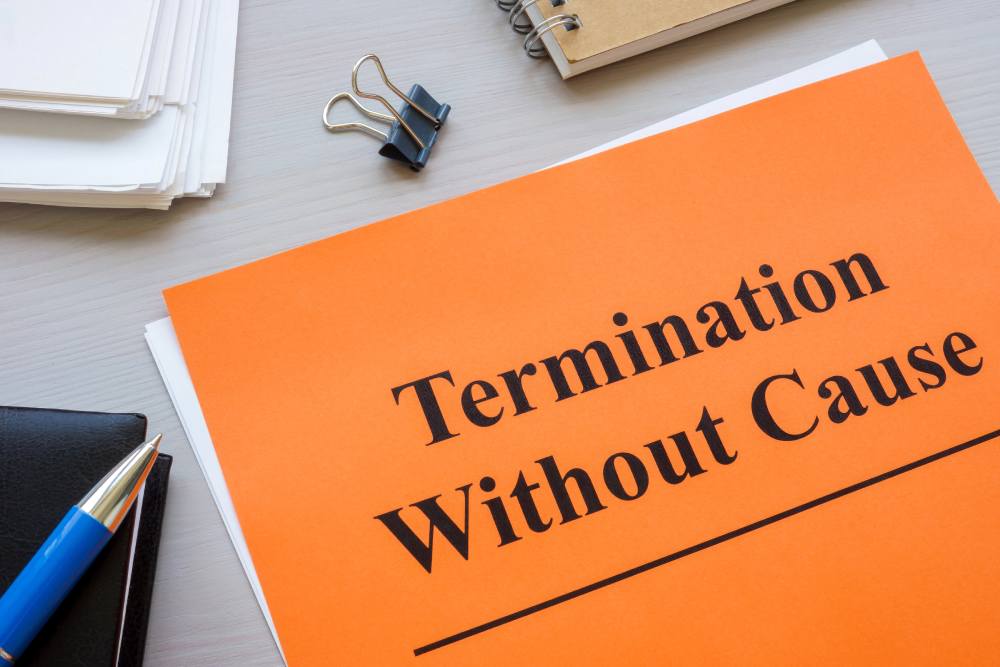
What Is Termination Without Cause?
Termination without cause happens when an employee is let go without specific misconduct or performance issues. Layoffs, business closures, or job/position eliminations are typical examples.
Employees in this category may qualify for severance packages, accrued vacation payouts, and unemployment benefits.
This type of termination focuses on business needs rather than individual actions, though written agreements often define the precise benefits owed.
Legal Considerations for Both Types
The distinction matters in employment disputes. Knowing whether a termination qualifies as with or without cause can affect negotiations, severance eligibility, and potential claims.
Employees frequently need legal terminology explained in separation agreements and company policies. Complex language can obscure rights and responsibilities, so careful review is recommended.
Wrongful Termination Risks
Some terminations, even those classified as with cause, may be contested. Employees can gather wrongful termination proof to challenge firings they believe violate state law or employment contracts.
Evidence might include emails, performance records, witness statements, or inconsistent treatment compared to colleagues. Knowing how to document concerns is necessary for protecting legal rights.
Comparing Legal Firing and Wrongful Termination
Distinguishing the differences between legal firing vs. wrongful termination helps workers evaluate options. A legal firing is in keeping with company policy and employment agreements.
A wrongful termination occurs when an employee is fired for illegal reasons, such as retaliation or discrimination.
Workers often face confusion because companies may label a dismissal as “for cause” even when protected activities are involved. Knowing the difference can affect how disputes are pursued.
Documentation and Communication
Employees should request written explanations of terminations to clarify cause, benefits, and deadlines. Documentation helps support unemployment claims, potential legal disputes, and future job references.
Misunderstandings often arise when terminations are verbal or accompanied by dense, technical language.
Guiding Employees Through Termination Challenges
Sirmabekian Law Firm assists workers across Los Angeles and throughout California who face complex terminations. Our focus on labor and employment law allows us to analyze both cause-based and non-cause-based dismissals.
We guide employees in understanding agreements, evaluating severance offers, and protecting rights. Our Spanish-speaking staff helps documented and undocumented workers work through legal challenges with confidence.
We work closely with employees to interpret agreements, gather evidence, and handle retaliation concerns. Our team responds quickly to questions and makes sure clients know every step of the process.
If you have questions about termination with cause vs. without cause or concerns about your employment rights, please reach out to Sirmabekian Law Firm.